Every year, I speak with new and aspiring Solution Architects who are keen to make an impact. That enthusiasm is great—but early in their careers, many get distracted by the wrong questions.
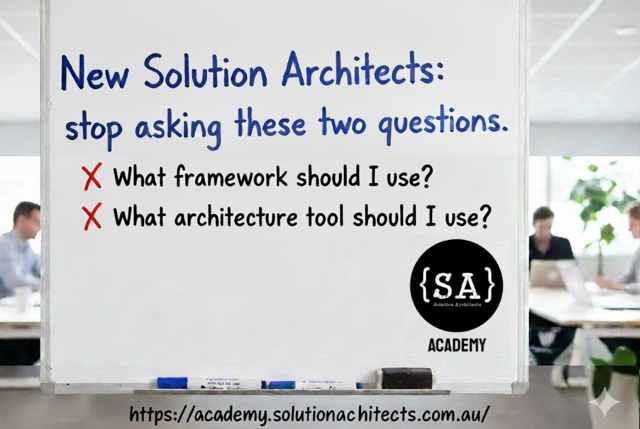
If you want to grow as a Solution Architect in 2026 and beyond, here are two common questions to stop asking, and why they miss the point.
1. “What framework should I use? Is TOGAF a good start?”Let’s get one thing clear upfront:
TOGAF is an Enterprise Architecture framework, not a Solution Architecture framework. That doesn’t make it useless. TOGAF is excellent for understanding enterprise context and helps Solution Architects appreciate that their designs must align with broader organisational goals and constraints. In fact, architects with exposure to Enterprise Architecture often become stronger Solution Architects over time. But here’s the reality I’ve seen repeatedly:
- I’ve worked with TOGAF certified architects who struggled to deliver real outcomes
- I’ve also worked with outstanding architects who’ve never touched the framework
TOGAF doesn’t make you a good architect.
However, if you already have strong fundamentals, it can absolutely help you become a better one. Frameworks are amplifiers, not substitutes.
2. “What architecture tool should I use?”You don’t need a tool to be a good architect. As one great architect once said to me:
“A fool with a tool is still a fool.”A strong architect can communicate strategy and design on the back of a napkin if needed. A simple, well-thought-out diagram that clearly conveys intent to the right stakeholder will always beat the most sophisticated tool used without clarity or purpose.
That’s not to say tools aren’t useful. They help manage complexity, maintain consistency, and track change over time. But they should support your thinking and not replace it. Be the architect first.
Don’t let your capability depend on the tool.
The Uncomfortable TruthArchitects who over-rely on frameworks and tools often lack confidence in their core capabilities. That reliance is understandable. Frameworks and tools can feel like a safety net early on. But real growth comes from understanding what actually makes a good architect and deliberately building those fundamentals.
Focus on developing:
- Business acumen
- Stakeholder communication
- Technical depth
- Strategic thinking
- The ability to simplify complexity
When those foundations are strong, frameworks and tools will amplify your impact rather than mask gaps. Build the architect within first. Everything else comes later.